Wednesday, January 25, 2017

Jubal Sackett - A Short Review


Another L’Amour novel from the Sackett series, Jubal Sackett was, I think, the best one I’ve read to date. Once again, Jubal is a strong role model for masculine life: self-reliant, able, decisive, loving peace but not afraid to fight. This novel was different from the others I’ve read because it prominently featured his love interest, an Indian princess.


I have long desired to live in a way that is free from modernity. I love to idea of cutting down trees, turning them into a cabin, living off the land, etc. For those who know me, this is pretty different from who I am, but I think that is a big part of the attraction for me. I’m not OK with me, sometimes. That is not, I believe, in an unhealthy way but in the sense that I know I could be more and do more with myself. A world in which there was unclaimed land and one could benefit himself simply by working hard is a world I think I would love, whatever its hardships.

Another interesting aspect of this book was the way L’Amour weaves into it some of the mysteries of history. For example, he includes a run-in with a mastodon and defending its inclusion by giving examples of far more recent witnesses to them among Native Americans than is widely believed. Another example would be the characters speaking of finding Roman coins owned by Indians. Of course, that shouldn’t be, but, again, L’Amour gives examples of these being found in Tennessee in the 18th and 19th centuries. I tend to like these references because they speak to me of the validity of a young earth and the family of man, descended from Adam and then Noah.

Friday, January 20, 2017

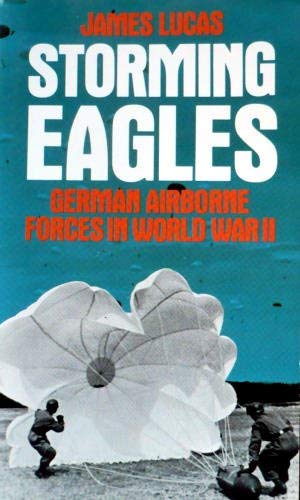
Storming Eagles - A Short Review


Image result for storming eagles

This book has some very good parts. To me, the best parts were those concerned with the Fallschirmjager during their heyday – really from May, 1940, to June, 1941 – about 1 year. During this period, German paratroopers made awesome contributions to victory in Holland, Belgium, Greece, and Crete. From that time forward, the realities of a slow but steady decline for Nazi Germany meant that the paratroop formations, though there were more and more of them, were little more than elite infantry.

One must be careful not to be overly positive toward anything coming out of the Third Reich, but these men did awesome feats of military accomplishment at their height. The storming of the Belgian fortress, Eben-Emael, at the opening of the battle that defeated France in May, 1940, is inspiring. A small force of paratroopers landed their gliders directly on top of the fortress and forced it to capitulate to them, opening vital roads to the advancing German conventional forces. At Crete, an entire paratroop division was landed and, with the aid of German mountain troops flown in to a captured airport, captured the island.

What I take from these accounts is the need for decisive action. This doesn’t just apply to military situations. For me, and for many others, the temptation to indecision is great. Indecision will lead to defeat in life, though. So, I hope to learn from these me. 

This book is probably best read by those truly interested in World War II and/or airborne operations and history. It is quite dry at times.